Steel Ball Run Drops One Episode — The Internet Already Lost Its Mind
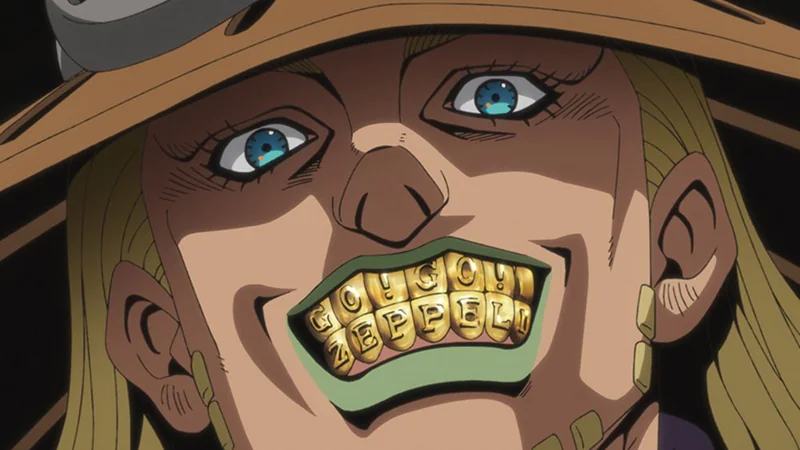
Steel Ball Run Drops One Episode — The Internet Already Lost Its Mind
JoJo's Bizarre Adventure Part 7 · Netflix · March 2026
47 minutes in, it's sitting at #1 on MyAnimeList with a 9.38 average score. Manga readers are crying. Anime-onlys are confused. Netflix is on thin ice. Here's everything going down with the most anticipated JoJo adaptation ever.
The Drop That Broke Anime Twitter
Let's not sugarcoat it — Steel Ball Run has been the most anticipated JoJo arc since, well, forever. Part 7 has been sitting at the top of manga fans' wishlists for years, and on March 19, 2026, Netflix finally delivered the "1st Stage" premiere. One 47-minute episode. And the internet reacted like Gyro just pulled off a Spin move on the entire anime community.
Within 24 hours, SBR shot to #1 on MAL's all-time rankings, overtaking certified classics like Frieren. Is that a fair rating for one episode? Absolutely not. Is it an accurate reading of how much people care about this? 100%.
This isn't just a review. It's a breakdown of why the premiere landed like a cultural event — the good, the controversial, the memes, and what's still riding on whether Netflix can keep the momentum going.
| Metric | Number |
|---|---|
| MAL Score (Day 1) | 9.38 |
| MAL All-Time Rank | #1 |
| Premiere Runtime | 47 minutes |
| SBR Manga MAL Score | 9.34 |
What's Actually Happening in This Show
If you've somehow avoided Part 7 spoilers until now, here's the setup. It's 1890. There's a cross-country horse race — San Diego to New York — called the Steel Ball Run. Entry is open to anyone crazy enough to try. Among the 3,000+ competitors are Johnny Joestar, a paraplegic ex-jockey with a chip on his shoulder the size of the Rocky Mountains, and Gyro Zeppeli, a mysterious Italian executioner who fights using steel balls and a technique called the Spin.
This isn't your typical JoJo setup. No Dio. No ancient vampires (at least not yet). It's quieter, more grounded — almost like a Western thriller wearing a JoJo costume. The premiere covers the San Diego start, Gyro's first proper Spin demonstration (yes, the iconic "make the bullet twist back and hit the shooter" scene), Johnny's first moment standing up after touching a steel ball, and the conclusion of the opening race stage.
"The moment Johnny stands up is quiet. No flashy sound effect. Just a man who hasn't walked in years, on his feet, staring at something he can't explain yet." — r/StardustCrusaders, episode 1 thread
For anime-only viewers, this might feel slow compared to the chaos of Stardust Crusaders or Diamond is Unbreakable. There are no Stand battles in Episode 1 — those come much later. What you're getting is atmosphere, character, and the slow burn that makes Part 7 the kind of story people call Araki's masterpiece. Give it a minute. It earns everything it sets up.
The alt-universe framing matters too. SBR is a soft reboot — a separate timeline with familiar names in unfamiliar roles. Diego Brando is here, but he's not that Dio. Sandman gets introduced early as a frontrunner and immediately becomes one of the episode's most visually arresting presences. A lot of groundwork is being laid efficiently without it ever feeling like an info-dump.
The Animation: Way Better Than the Trailer Promised
Let's address the elephant — or the horse — in the room. The pre-release trailers got cooked online. Stiff 3D horses. Dead-eyed crowd shots. People were genuinely worried David Production didn't have the budget to do SBR's incredibly detailed manga art justice. The discourse got loud enough to spawn a whole editorial cycle of "Everything Wrong With the SBR Trailer" content.
The actual episode? Much better. Not perfect, but clearly a step above what the trailers showed.
What works
The standout moments are exactly where they should be. Gyro's Spin sequences carry genuine kinetic weight. Sandman's opening sprint is one of the most visually interesting things in the episode — the way he moves through terrain reads like parkour before parkour existed, and the framing sells it. The compositional choices throughout are very JoJo: deliberate, almost pose-by-pose, with that signature flat-panel aesthetic kicking in when it counts.
Johnny's first stand-up scene is staged with real restraint. No triumphant musical swell. Just the shot. And it lands because of that.
What's still rough
Wide-angle crowd shots and distant horse sequences still carry some of that uncanny CG energy. If you're coming in hoping for Demon Slayer-level fluidity wall-to-wall, you won't find it here. JoJo has never been a sakuga flex show though — its strength has always been in storyboarding, art direction, and the theatrical staging of key moments. On those terms, the premiere does its job.
Character designer Daisuke Tsumagari returning from earlier parts means the visual continuity feels solid. It's unmistakably JoJo while leaning hard into a late-1800s Americana aesthetic — dusty palettes, vast open land, costuming that actually looks period-accurate in ways the manga sometimes doesn't bother with.
Worth noting: the real visual gauntlet comes later. The race gets more complex. Stands get introduced. Some manga chapters are straight-up nightmare fuel to adapt. The animation conversation is far from over.
Music, Sound, and the Vibe
Early reception is heavily praising the atmospheric work in the premiere. The audio design leans into the Western setting — open desert acoustics, sparse instrumentation building slowly under race sequences. It doesn't try to immediately ape the operatic bombast of earlier JoJo openings. That's the right call. SBR has a different register and the score clearly understands that.
No full OP dropped in the "1st Stage" episode — this was framed more as a prologue event than a standard episode, so the traditional opening format hasn't kicked in yet. When it does, it's going to be a moment. JoJo openings are cultural events in their own right, and the community is already deep in speculation about what direction they'll go with a story set in 19th century America.
Voice acting discussions are glowing across community threads. The performances for Johnny and Gyro in particular are landing the dynamic early — Gyro's charismatic unpredictability versus Johnny's simmering bitterness read clearly, and you understand why these two end up stuck together despite being so obviously incompatible.
The Hype Machine: "Peak Fiction" Posting Has Arrived
Here's the cultural context you need. The Steel Ball Run manga sits at #2 on MAL's all-time manga list, sitting around a 9.34 score from nearly 200k users. It's been there for years. For a huge chunk of the anime-watching community, this isn't just another adaptation — it's the adaptation. The one they've been waiting for since JoJo got popular enough that Part 7 felt possible.
So when one 47-minute episode drops and immediately starts trending everywhere, it's not purely because Episode 1 was the greatest thing ever made. It's years of built-up anticipation plus a very organised, meme-literate fandom doing what they do.
The MAL situation
The ratings discourse is real. Climbing to #1 on MAL's all-time list with a 9.38 after one episode — beating completed series with hundreds of episodes of earned reputation — is a coordinated fandom event dressed as a rating. Critics are pointing to it as proof the MAL scoring system is broken. Defenders are saying the manga's existing status is the context. Both sides are kind of right, honestly.
A large portion of voters are rating the source material they already love, not the adaptation they just watched. That's not dishonest — it's just how fandom operates in 2026.
Beyond MAL, reaction videos spiked fast. Watch-along streams were full of "AOTY" comments within the first 20 minutes. The "this is the story of how I began to walk" line is already a meme template. Sandman's opening sprint got turned into speedrun jokes. Gyro explaining the Spin is back on everyone's feeds.
It's genuinely funny that a show set in 1890 is the main character of anime social media in March 2026, but here we are.
The Flashpoints Nobody's Shutting Up About
It wouldn't be a JoJo premiere without discourse. SBR has several live culture-war threads running simultaneously.
🐴 The CG Horse Problem
Pre-release trailers sparked real concern about the production. Stiff CG horses and lifeless crowd scenes worried fans that SBR's beautiful manga art was being cheap-animated. The episode softened the criticism but didn't kill it — some sequences still look rough in wide shots.
📊 MAL Rating Brigades
SBR shot to #1 on MAL's all-time list within 24 hours. Critics say it proves the rating system is beyond saving. Defenders say the manga's existing reputation makes it a reasonable extrapolation. The actual truth is somewhere in the middle and nobody wants to be there.
📡 The Netflix Problem
Stone Ocean's batch-drop strategy is still fresh in people's memories. Netflix releasing JoJo all at once killed the weekly hype cycle and tanked the social conversation. Fans are watching SBR's release cadence as closely as the actual show. This is Netflix's shot at redemption — and the fandom knows it.
✝️ The Jesus Question
Part 7's central MacGuffin is the Saint's Corpse — strongly implied to be Jesus Christ. The religious dimensions of SBR are theologically serious and the fandom has been discussing them for years. How explicitly the anime handles it — crucifixion scenes, resurrection parallels, quasi-miraculous interventions — is a live debate that's only going to get louder.
The Netflix problem deserves more space
Seriously. This is the conversation underneath every other conversation. Stone Ocean came out on Netflix in 2021–2022 with batch drops instead of weekly episodes. The result was a ghost-town social media presence compared to how Demon Slayer or Attack on Titan ran their final arcs. A huge portion of JoJo's casual audience drifted off because there was no weekly ritual to bring them back.
SBR's release model is being watched as a referendum. If Netflix commits to a proper week-to-week schedule and lets this build momentum episode by episode, it could be a genuine cultural moment through the whole run. If they batch-drop again, the fandom will burn them in effigy and the show will underperform its potential regardless of quality.
Hints at a staged or weekly rollout have calmed some people. But the trust isn't fully there yet. It has to be earned.
Why This Feels Bigger Than a Normal Premiere
Steel Ball Run sits at a genuinely unique intersection. To understand why the premiere landed with this much weight, you have to understand what it's carrying.
The manga's status. SBR has been sitting near MAL's #2 all-time for years. Nearly 200k users. 300k members. It's not a new fandom discovery — it's been a proven consensus pick as Araki's best work for over a decade.
The soft reboot angle. Part 7 isn't just another JoJo arc. It's the start of the new universe that continues through JoJolion and The JoJoLands. Adapting it well isn't just finishing one story — it's opening the door to everything that comes after.
The thematic weight. SBR is about grace, corruption, the American frontier, the misuse of the divine, and two damaged men finding purpose in each other. It's the most emotionally complex and thematically ambitious thing Araki has written. That sets it apart from any casual "battle anime" comp.
The sales signal. Viz's English hardcover Vol. 1 moved 14,448 units in its first week — a record for hardcover manga in the US, beating a previous Berserk Deluxe record. The market was hungry for this before a single episode aired.
How it compares
The closest comp for the type of hype SBR generates isn't really another JoJo part. It's more like what happened when Chainsaw Man and Jujutsu Kaisen went from "manga readers' secret" to mainstream anime discourse — except SBR's source reputation is arguably stronger than either at their peak.
In terms of Western-aesthetic storytelling with emotional depth, the best recent comp is Vinland Saga. SBR shares that DNA — slow start, character-focused, payoff that makes the patience worth it. The difference is SBR eventually goes completely off the rails in the best possible way, and Vinland Saga stays grounded. Both are valid. SBR is just weirder.
| Element | Steel Ball Run | Stone Ocean | Demon Slayer |
|---|---|---|---|
| Source reputation | Elite (MAL #2 manga) | Solid | Strong |
| Release model | Weekly (TBC) | Batch drop | Weekly |
| Animation hype | Contested | Average | Sakuga showcase |
| Week 1 social energy | Massive | Muted | Massive |
| Thematic depth | High | Moderate | Moderate |
Where Things Stand After One Episode
The honest take: the premiere is a strong, atmospheric opening that satisfies manga readers and gives anime-onlys exactly what they need to understand the world without overwhelming them. Direction is confident. Key scenes land. The tonal shift away from classic JoJo chaos into grounded Western drama is established clearly and early.
The real tests are all still ahead though. The race gets complicated. Stands come in. The Valentine material and the climactic arc are among the most challenging things Araki has written to stage visually. And the Jesus-adjacent religious content is going to get interesting when it reaches the sequences manga readers have been bracing for.
David Production delivered a strong entry point. Netflix has to carry it from here.
One 47-minute episode can't be a definitive verdict on a season. What it can be is a confidence signal — and this premiere sends one. Whether SBR becomes the definitive adaptation of Araki's best arc depends less on the next episode and more on whether Netflix learned anything from Stone Ocean.
The production, the fandom, the release platform, and the source material are all pointed in the same direction right now. That almost never happens. If Netflix keeps the weekly schedule and David Production maintains this level of craft, Steel Ball Run has a real shot at being the anime event of 2026.
The other side of that: if Netflix batch-drops it, if the animation dips hard on the complex sequences, or if the pacing fumbles the back half of the race — the fall from these expectations will be loud.
Your Turn
Already watched it? Currently speed-reading the manga to catch up? Still salty about the CG horses? Drop your take in the comments. Especially interested in: what moment in the premiere hit hardest, and how confident are you Netflix doesn't fumble the release cadence?
And if you're anime-only going in cold — please stay off the wiki. Trust the race. It goes places.
Tags: Steel Ball Run, JoJo's Bizarre Adventure, Part 7, Netflix Anime, Anime 2026, David Production, MAL, Gyro Zeppeli, Johnny Joestar
Credit: Official JoJo Portal interview: アニメ『スティール・ボール・ラン ジョジョの奇妙な冒険』 木村泰大監督オフィシャルインタビュー【前編】
Comments & Discussion
🗣️ Share your thoughts! Comments will appear here.