Jujutsu Kaisen: The Anime That Broke Guinness Records—Then Broke Its Own Fandom
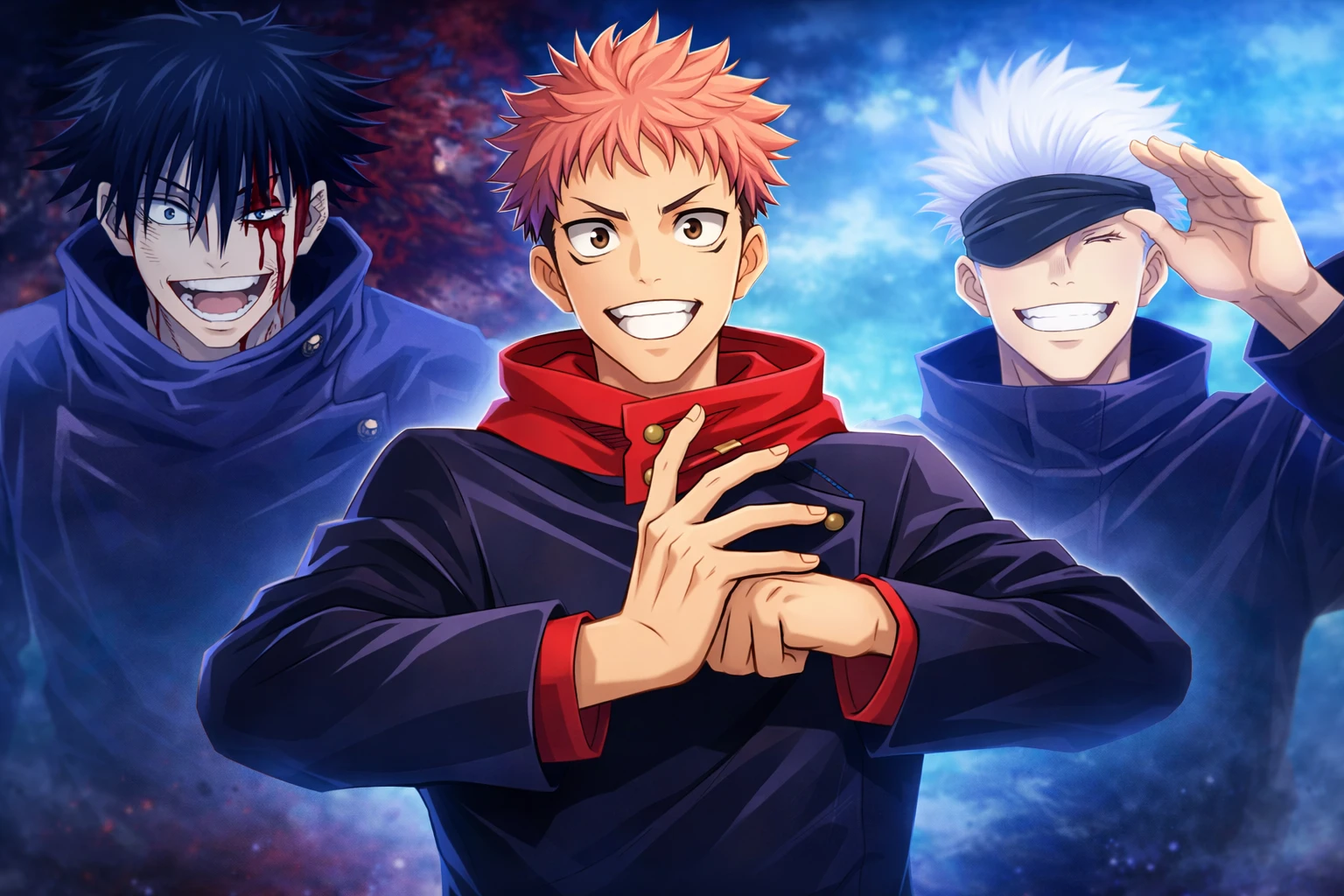
Jujutsu Kaisen: The Anime That Broke Guinness Records—Then Broke Its Own Fandom
Introduction: When Success Becomes Controversial
What happens when an anime becomes too successful? Jujutsu Kaisen might have the answer. With a Guinness World Record for being the most in-demand animated TV show globally, 11 Crunchyroll Anime Awards including Anime of the Year, and manga sales that dominated 2024 with 7.6+ million copies sold, you'd think the fandom would be celebrating. Instead, Reddit threads overflow with ratings as low as 4/10, fan-made "fixed" endings, and heated debates about whether the series is a masterpiece or an overhyped spectacle.
This isn't your typical anime controversy. Jujutsu Kaisen has become a cultural phenomenon that 71.3% of Gen Z viewers can't stop watching—even as they argue about everything from character deaths to studio exploitation. It's the paradox defining modern anime: technically brilliant, commercially unstoppable, and somehow deeply divisive all at once.
The Plot: Darkness Disguised as Shōnen
On the surface, Jujutsu Kaisen follows a familiar recipe: high schooler Yuji Itadori swallows a cursed object (the finger of ancient curse Ryomen Sukuna) and gets dragged into a hidden world of sorcerers fighting supernatural threats. Standard shōnen fare, right?
Wrong.
What separates Jujutsu Kaisen from its contemporaries is its philosophical backbone. Cursed energy doesn't manifest from training montages or friendship speeches—it emerges from human negativity, fear, and hatred. Every battle becomes an ideological confrontation: Can violence ever be justified? Who decides morality in a world where power comes from humanity's worst impulses? Should cursed spirits, born from human emotions, even be considered evil?
The series structures its narrative around several major arcs, with the Shibuya Incident serving as its emotional and thematic climax—a turning point that left characters permanently scarred and the fanbase permanently split. The Hidden Inventory/Premature Death arc, which explores Satoru Gojo's youth and a mission that shaped his entire philosophy, achieved such cinematic quality it swept the 2024 Crunchyroll Awards.
But here's where things get complicated: many fans argue that post-Shibuya, the series prioritized battle sequences over character development, leaving emotional threads dangling and world-building questions unanswered. The Culling Games arc, while visually spectacular, became a flashpoint for criticism about pacing and narrative priorities.
Visuals & Animation: Beauty Built on Broken Backs
Let's address the elephant in the room: Jujutsu Kaisen Season 2 features some of the most breathtaking animation in modern anime history. Studio MAPPA delivered sakuga (high-quality animation sequences) so consistently impressive that fans praise "godly animation even in non-fight scenes." The Hidden Inventory arc's cinematography rivals theatrical films, with deliberate shot composition, dynamic camera work, and visual storytelling that enhances emotional beats without a single word of dialogue.
Episode director Hokuto Sadamoto's vision transformed standard shōnen battles into kinetic art. Watch Gojo use his Infinity technique to levitate Riko instead of physically carrying her—a seemingly minor change from the manga that reinforces the power system's mechanics while adding visual elegance. These thoughtful adaptations demonstrate why the anime often surpasses its source material.
But this brilliance comes with a devastating cost.
Episode director Hokuto Sadamoto publicly apologized after Episode 14's quality dip, revealing he couldn't complete 250 cuts in two weeks. Animators worked under documented exploitation: forced NDAs about working conditions, compressed production schedules, and wages that don't match the labor intensity. Episode 17 allegedly aired only 30% complete. Jujutsu Kaisen 0 took just four months to produce (versus the industry standard of 2-3 years) while grossing ¥13.75 billion domestically.
The series' visual triumph is inseparable from animator sacrifice—a uncomfortable truth that complicates every "best animation" accolade.
Music & Voice Acting: Sonic Excellence
King Gnu's opening theme "SPECIALZ" became a cultural phenomenon in its own right, and Tatsuya Kitani's "Where Our Blue Is" captured the tragic beauty of the Hidden Inventory arc. The soundtrack, composed by a team of talented musicians, seamlessly blends traditional Japanese instrumentation with contemporary hip-hop beats and orchestral swells, creating an auditory identity as distinctive as the visual style.
The voice acting deserves equal recognition. Yuichi Nakamura brings charismatic arrogance to Satoru Gojo, making him simultaneously insufferable and irresistible. Junya Enoki captures Yuji Itadori's evolution from cheerful optimism to trauma-hardened determination. The Japanese cast delivers performances that elevate already-strong character writing, particularly during emotionally devastating moments in the Shibuya arc.
Pacing: The Series' Achilles' Heel
Here's where Jujutsu Kaisen stumbles. While the early arcs balance character development with action spectacularly, post-Shibuya pacing becomes increasingly contentious. Critics argue the Culling Games prioritized battles over breathing room, leaving insufficient space for characters to process trauma or for audiences to absorb world-building.
IGN's controversial 6/10 rating for Season 2 specifically cited this issue: excessive action sequences without narrative rest stops. It's a valid criticism—when every episode delivers movie-quality fights, the format paradoxically loses impact. The manga's final arc compressed so much content that crucial character moments felt rushed, lore questions went unanswered, and emotional beats didn't land as intended.
Some defenders argue this reflects intentional thematic choices about how violence consumes everything, leaving no space for reflection. Others insist it's simply structural weakness masked by visual excellence.
The Controversies That Define the Fandom
The Gojo Death: Off-Screen Heartbreak
The series' most explosive controversy erupted when fan-favorite Satoru Gojo—the strongest sorcerer whose long-awaited return from imprisonment had fans celebrating—died off-screen following his climactic battle with Sukuna. The execution felt anticlimactic to many viewers who'd invested years anticipating this confrontation.
Adding salt to the wound, Yuta Okkotsu later body-snatches Gojo's corpse to use his Limitless technique—a narrative choice some praised as poetic character work while others experienced as desecration of a beloved character.
The Ending Backlash: When Fans Rewrite Canon
The manga's conclusion proved so divisive that fans created unofficial "fixed" endings. Core grievances include:
- Unanswered lore (Sukuna's pre-curse backstory, the three vengeful spirits' significance)
- Anticlimactic villain motivations
- Abandoned character arcs for Takaba, Higuruma, and others
- Insufficient resolution for the female cast, who effectively disappeared narratively after Shibuya
The fandom split between those defending the ending as thematically coherent (legacies matter more than explanations) and those calling it plot holes disguised as artistic ambiguity.
Translation Drama: Lost in Localization
The official English translation faced backlash for stiff dialogue and mistranslations, particularly in the dialogue-heavy final arc. The famous "Nah, I'd win" line emerged from revision, but repeated confusion between Shrine/Malevolent Shrine/Mahoraga and contradictory Black Flash mechanics left readers frustrated.
This sparked broader discussions about manga localization quality and appropriate criticism versus harassment of translators.
Cultural Impact: Gen Z's Anime Obsession
Jujutsu Kaisen achieved a global demand rating 71.2 times higher than the average TV show, peaking at 128x on December 29, 2023. This isn't just anime popularity—it's mainstream cultural penetration. Pop stars like Megan Thee Stallion reference Satoru Gojo in conversation. April 2024 data showed the series possessed the highest social media engagement (11.2 million interactions) among all top anime and network dramas in the United States.
The demographic breakdown reveals why: 71.3% of viewers are Gen Z (ages 13-22), substantially outpacing One Piece (56.7%) and Attack on Titan (64.4%). TikTok became ground zero for viral moments, with "manservice" featuring attractive characters like Gojo, Nanami, and Toji driving new viewer acquisition. Meme culture ranges from wholesome ("Sukuna appearing in your room to beat you with flip-flops") to elaborate character analyses.
But this viral success has a dark side: spoiler-heavy leak culture where manga readers post major events without warnings, toxic fandom behavior reminiscent of Attack on Titan's conclusion era, and "media illiteracy" accusations flying between defenders and critics.
Character Popularity: The Gojo Effect
Satoru Gojo consistently dominates popularity polls, with Yuji Itadori and Megumi Fushiguro trailing behind. This creates a paradox: while Yuji receives praise for realistic trauma responses and genuine growth, Gojo's charismatic invincibility captivates audiences more powerfully.
Sukuna generates the most polarized reactions—enthusiasts celebrate his unpredictability and refusal to be influenced by protagonist speeches, while detractors find him generically villainous, especially after separating from Yuji's internal dynamic post-Shibuya.
The female cast representation emerges as persistent criticism. After Shibuya, Nobara's prolonged absence, Mai's hollow sacrifice, and Miwa's minimal screen time despite established potential left fans disappointed. The series became accused of sidelining its female characters for extended battle sequences between male sorcerers.
Comparisons: Standing Among Titans
Jujutsu Kaisen occupies unique territory in the modern shōnen landscape. It shares Attack on Titan's willingness to brutalize beloved characters and subvert expectations, but lacks its predecessor's tight thematic coherence. It matches Demon Slayer's animation excellence while offering more complex power systems and moral ambiguity. It rivals My Hero Academia's character chemistry but prioritizes philosophical darkness over aspirational heroism.
The series' closest spiritual predecessor might be Bleach—both feature stylish protagonists, intricate power systems, and a tendency to prioritize cool factor over narrative efficiency. Whether that comparison flatters or condemns depends entirely on your perspective.
The Power System: Cursed Energy's Philosophical Depth
Among the series' most celebrated elements, the cursed energy system distinguishes itself through metaphysical depth. Unlike generic ki or chakra, cursed energy manifests from human negativity—making every battle fundamentally about humanity's relationship with its own darkness.
Fans praise the power system for emphasizing mechanics over arbitrary plot devices. Domain Expansions, Binding Vows, and Cursed Techniques follow internal logic that rewards attentive viewers. The famous restriction that explaining one's cursed technique increases its power creates natural exposition moments while reinforcing thematic ideas about knowledge and vulnerability.
Critics counter that despite this sophistication, fights ultimately dominate regardless, with the power system serving as window dressing for extended battle sequences.
The Verdict: Masterpiece, Mess, or Both?
Here's the uncomfortable truth: Jujutsu Kaisen is simultaneously anime's current apex and a cautionary tale about what that apex costs.
The case for masterpiece: Technical animation excellence, character chemistry that makes you genuinely care, a power system with philosophical depth, willingness to subvert shōnen tropes through brutal consequences, and cultural impact that transcends anime fandom into mainstream awareness.
The case for overhyped: Pacing deterioration post-Shibuya, underdeveloped world-building, abandoned character arcs, problematic female representation, unanswered lore questions, and visual spectacle that masks narrative weaknesses upon reflection.
The case for both: Perhaps Jujutsu Kaisen's contradictions are the point. It represents the medium's highest technical aspirations achieved through exploitative labor conditions. It features the most engaging character work alongside the most frustrating plot threads. It cultivates the most devoted fandom while spawning toxic community segments.
The series asks uncomfortable questions about cursed energy manifesting from human negativity—then becomes a real-world example of how entertainment industries generate cultural phenomena from creator suffering.
Looking Ahead: Season 3 and Beyond
With Season 3 announced and covering the Culling Games, anime-only viewers face a crucial question: will MAPPA's adaptation elevate divisive source material the way Season 2's Hidden Inventory arc did, or will production constraints and pacing issues translate the manga's controversial final stretch faithfully—for better or worse?
The fandom remains fractured between those who believe Jujutsu Kaisen stuck its landing thematically and those who insist it squandered narrative potential. But perhaps that division itself proves the series' cultural significance. Mediocre anime gets forgotten. Exceptional anime—even flawed exceptional anime—inspires passionate discourse years after conclusion.
Final Thoughts: The Conversation Continues
Jujutsu Kaisen doesn't just entertain—it forces confrontation with uncomfortable truths about modern anime production, fandom culture, and the tension between artistic vision and commercial demands. Whether you rate it 10/10 or 4/10, you're participating in the broader conversation about what we value in storytelling: technical excellence or narrative coherence? Subversive expectations or satisfying conclusions? Visual spectacle or character depth?
The series' greatest achievement might be refusing to let audiences remain passive consumers. It demands engagement, inspires analysis, and generates controversy—hallmarks of culturally significant art, even when that art is imperfect.
What's your take? Did Jujutsu Kaisen revolutionize shōnen or just animate it prettier? Share your thoughts in the comments below—this fandom's never been afraid of heated debate.
Keywords: Jujutsu Kaisen review, JJK Season 3, Gojo death controversy, MAPPA animation, best shonen anime 2024, Jujutsu Kaisen ending explained, anime community reactions, Shibuya Incident arc, Satoru Gojo popularity, cursed energy power system
Comments & Discussion
🗣️ Share your thoughts! Comments will appear here.