Ghost of Tsushima: The $397M Samurai Hit That Critics Can't Agree On
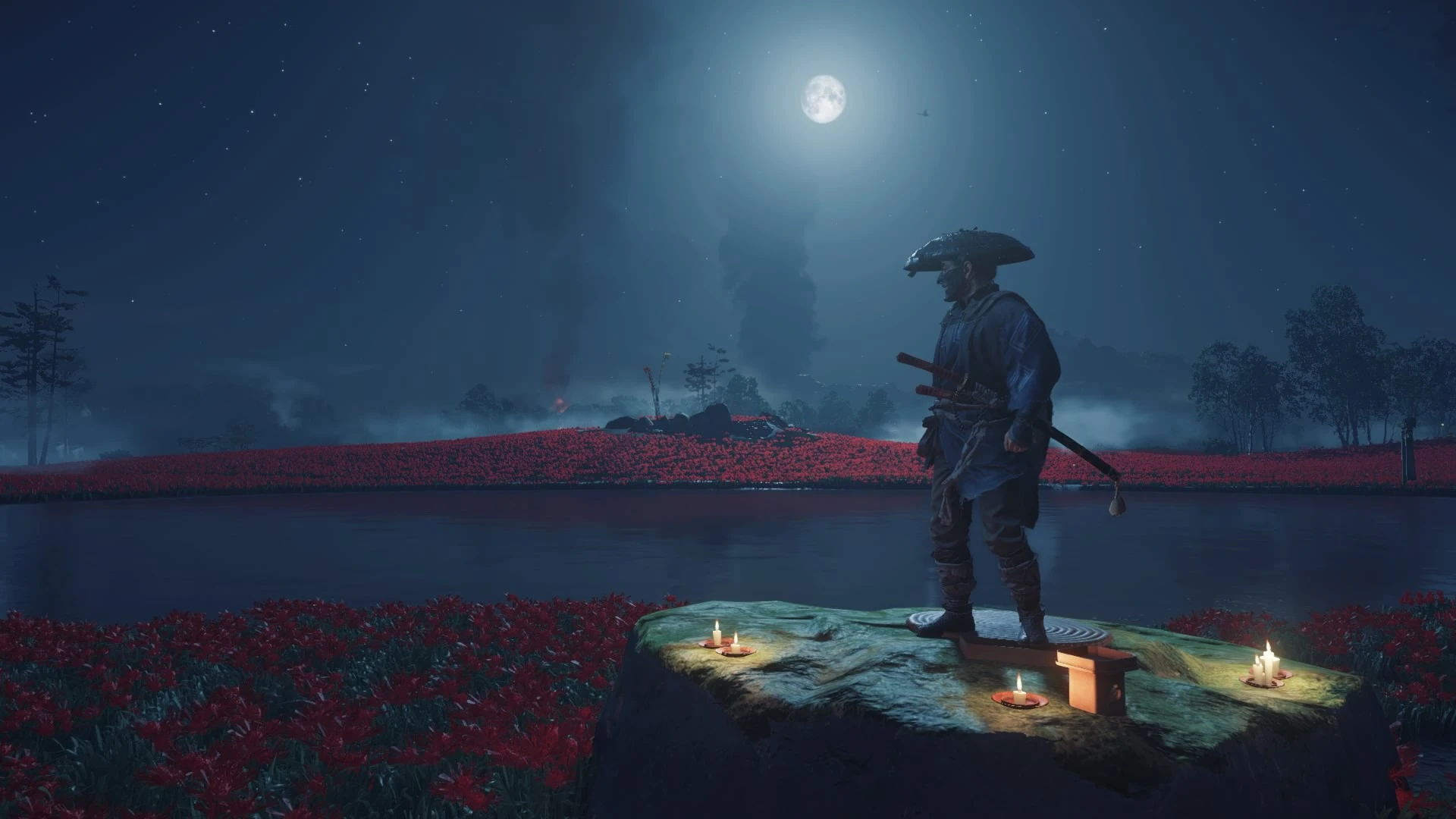
Ghost of Tsushima: The $397M Samurai Hit That Critics Can't Agree On
Is this the most beautiful game with the most hollow soul?
When a game sells 13 million copies and rakes in nearly $400 million, you'd expect unanimous praise. Yet Ghost of Tsushima remains one of gaming's most fascinating paradoxes—a technical masterpiece that critics simultaneously celebrate and dismiss, a cultural phenomenon that sparked debates about representation, and a "new IP" that somehow feels comfortably familiar.
Let me take you through why this samurai epic became PlayStation's most profitable bet while dividing critics harder than any katana could.
The Numbers Don't Lie (But They Don't Tell the Whole Story)
Released in July 2020 as Sucker Punch's pivot from superhero sandboxes to feudal Japan, Ghost of Tsushima immediately shattered records—2.4 million units in three days made it the fastest-selling new IP launch. The Director's Cut pushed sales to 9.73 million by 2022, and the May 2024 PC port added millions more.
With development costs around $60 million, that $397 million return represents the kind of ROI that makes Sony executives weep with joy. It's no wonder they greenlit Ghost of Yōtei for 2025.
But here's where it gets interesting: Metacritic's 83/100 critic score masks massive variance—Game Informer's 9.5/10 versus GameSpot's 7/10. Meanwhile, players initially rated it 9.1-9.3, placing it among PS4's highest-rated titles. The community loved what critics found... complicated.
Combat That Feels Like Poetry (Until It Doesn't)
The stance system is genuinely brilliant. Four distinct sword styles—Stone for swordsmen, Water for shield troops, Wind for spearmen, Moon for brutes—force tactical thinking without drowning you in stats. One-on-one duels strip away gadgets and upgrades, creating pure skill tests that demand pattern recognition and perfect timing.
You can play honorably, meeting enemies head-on in samurai tradition, or embrace the "Ghost" approach—stealth assassinations, explosives, psychological warfare. The genius? The game doesn't morally punish either choice. Jin Sakai might angst about dishonor in cutscenes, but gameplay rewards whatever works.
The problem? By mid-game, you're so overpowered that challenge evaporates. Experienced players skip stealth entirely, face-checking entire Mongol camps because sword combat feels that satisfying. The mechanical excellence proves surprisingly narrow—once you've mastered the dance, repetition sets in fast.
A World So Beautiful It Hurts (To Explore Repeatedly)
Three million procedurally-placed trees. Proprietary particle systems generating arterial spray and swaying grass with unprecedented density. The 2024 PC port by Nixxes runs flawlessly—RTX 4090 systems hit 70-80 FPS at 4K maximum settings, while even Steam Deck manages 30 FPS on medium.
The wind navigation mechanic deserves special mention. Instead of map markers cluttering your screen, you summon guiding wind that literally points toward objectives through environmental storytelling. Critics praised this as elegant design, though let's be honest—it's a waypoint system with better aesthetics.
Then there's the repetition. Fox shrines leading to charm upgrades. Hot springs extending health. Haiku composition. Bamboo-cutting. The first time? Magical. The twentieth? Kotaku nailed it: these feel like "meaningful diversions" that function primarily as progression gates rather than organic world engagement.
A rescued villager automatically rewards crafting materials—no consequence, no interaction, just transaction. Shrines exist for mechanical benefits, not cultural meaning. The game can demand 40-50 hours for the main story while avoiding collectibles, with platinum trophies requiring every single side activity. That's not exploration—it's exhaustion.
Jin Sakai: The Protagonist-Shaped Void
Here's the uncomfortable truth: Jin is boring.
The story—defending Tsushima against Mongol invasion while wrestling between samurai honor and pragmatic tactics—draws explicitly from Akira Kurosawa films. But where Kurosawa explored moral complexity through internal contradiction, Jin exists as a blank slate defined entirely by external conflict.
The supposed tension between honor and dishonor becomes mechanically irrelevant. No penalties for stealth approaches. No distinct dialogue for different playstyles. No consequences for tactical choices. Jin struggles with his Ghost transformation in cutscenes while gameplay remains completely agnostic to your methods.
Worse, the class consciousness blindspot is glaring. Jin is a feudal aristocrat whose family owned the system producing the hardship he witnesses in occupied villages. Yet the game presents him as natural liberator without interrogating his investment in perpetuating class hierarchies. When Jin raids villager homes for materials "to help his cause," it's framed as necessity, not exploitation of his own subjects.
The best missions? Those focusing on Jin's allies—Lady Masako's family vengeance, Sensei Ishikawa's wayward student. They work precisely because they foreground other characters' agency, functioning as character studies rather than Jin-centric power fantasies.
The Cultural Representation Elephant in the Dojo
Ghost of Tsushima engages in deliberate historical fiction—fabricated locations, invented characters, simplified narratives—justified through "Kurosawa homage" rather than documentary accuracy. Western critics largely accepted this framing.
But academic and cultural critics identified specific failures:
-
Dehumanization of Mongols: Described as inherently "brutal" and "relentless" while samurai remain noble. Mechanically, Mongol AI makes stealth trivial while samurai opponents stay formidable—ludic hierarchy matching narrative bias.
-
Aesthetic reductionism: UI design mimics calligraphy and ukiyo-e not for function but because it's the most obvious "Japanese-coded" aesthetic available.
-
Nationalist mythmaking: Centering invasion repulsion as moral imperative without exploring class hierarchies perpetuated through victory reproduces uncritical nationalism.
The uncomfortable comparison? When Assassin's Creed Shadows took similar historical liberties with Japanese settings in 2024, it faced diplomatic backlash and review bombing. Why did Ghost of Tsushima skate by relatively unscathed?
To be fair, Sucker Punch conducted genuine cultural consultation—research trips to Tsushima, historical advisors, Japanese localization teams. The distinction between problematic representation and malicious appropriation matters, even if execution remained imperfect.
The Hype Machine Versus Reality
Steam reviews following the PC launch call it "the best Assassin's Creed game ever made"—which is damning praise by comparison. It acknowledges exceptional execution of derivative design rather than innovation.
Reddit discussions reveal most players encountered the game isolated from pre-release discourse, discovering genuine enjoyment in moment-to-moment combat. The vocal minority criticizing repetitive design often absorbed critical discourse mid-playthrough or experienced diminishing returns pursuing platinum trophies.
The Director's Cut's initial 4.6 Metacritic user score (later rising substantially) reflected perceived re-release pricing issues rather than artistic quality. As sentiment normalized, scores improved—community disagreement with Sony's business model, not Sucker Punch's craft.
Technical Excellence as Conservative Innovation
Understanding Ghost of Tsushima requires recognizing Sucker Punch's creative goals: not ambitious genre innovation but methodical genre translation—applying kinetic controller feel perfected across Sly Cooper and inFamous to samurai sword combat.
The particle effects system inherited from inFamous found new application generating atmospheric beauty rather than superhero spectacle. The wind mechanic emerged from Kurosawa-inspired art direction emphasizing environmental movement. This continuity explains both successes and failures—combat achieves excellence through refined mastered mechanics, while narrative limitations emerge from reproducing samurai mythmaking rather than interrogating it.
The announced Ghost of Yōtei suggests potential course correction: creative director Rob Davis emphasizes expanded player freedom, handcrafted quests replacing collectible-driven exploration, and deeper cultural integration through mercenary protagonist narrative.
Worth Playing in 2025?
Ghost of Tsushima delivers exactly what it promises: a gorgeously realized samurai adventure with excellent combat and minimal mechanical friction.
Play it if you want:
- Technically polished, kinetically satisfying action wrapped in samurai mythology
- Combat that feels phenomenal for 20-30 hours before repetition sets in
- Environmental beauty that screenshots can't capture
- A competent Kurosawa-inspired tale without demanding deep engagement
Skip it if you expect:
- Narrative depth or cultural interrogation
- Systemic innovation or emergent gameplay
- Meaningful player choice consequences
- World activities that feel organic rather than mechanical
It represents the apotheosis of PlayStation 4 exclusive design—not groundbreaking but authoritative, not innovative but refined. The 13 million players who bought it found substantial satisfaction. The critics who rated it 7-9.5/10 all saw the same game differently based on what they valued.
Me? I spent 45 hours in Tsushima, platinumed the Director's Cut, and never touched it again. The combat sang. The story whispered. The world looked stunning but felt hollow. Your mileage will absolutely vary—and that's the most interesting thing about this beautiful, frustrating, undeniably successful game.
Have you played Ghost of Tsushima? Did the beauty outweigh the repetition, or did Jin's journey leave you cold? Drop your hottest takes in the comments.
Related Content
If you enjoyed this deep dive into Ghost of Tsushima, don't miss our comprehensive review of Ghost of Yōtei—the 2025 sequel that built upon Tsushima's foundation with a new protagonist, expanded combat system, and the stunning landscapes of 1600s Hokkaido. We explore how both games represent Sucker Punch's evolution of the samurai action-adventure genre.
Credit: In-game screenshots
Comments & Discussion
🗣️ Share your thoughts! Comments will appear here.