Ghost of Yōtei: The $130M Hit That Proved the Haters Wrong
Ghost of Yōtei: The $130M Hit That Proved the Haters Wrong
3.3 million copies sold. Pre-launch boycotts. A female samurai protagonist. Here's what actually happened.
Let's address the elephant in the room: Ghost of Yōtei was supposed to fail. At least, that's what certain corners of the internet insisted. A vocal boycott campaign, hashtags ablaze, developers fired amid controversy—this game had everything needed for a spectacular crash landing.
Instead? It shipped 3.3 million copies in its first month and became PlayStation's biggest European launch since Spider-Man 2.
So what the hell happened? I spent 60+ hours in 1600s Hokkaido to find out, and the answer is more interesting than either the haters or superfans want to admit.
The Protagonist Problem (That Wasn't Actually a Problem)
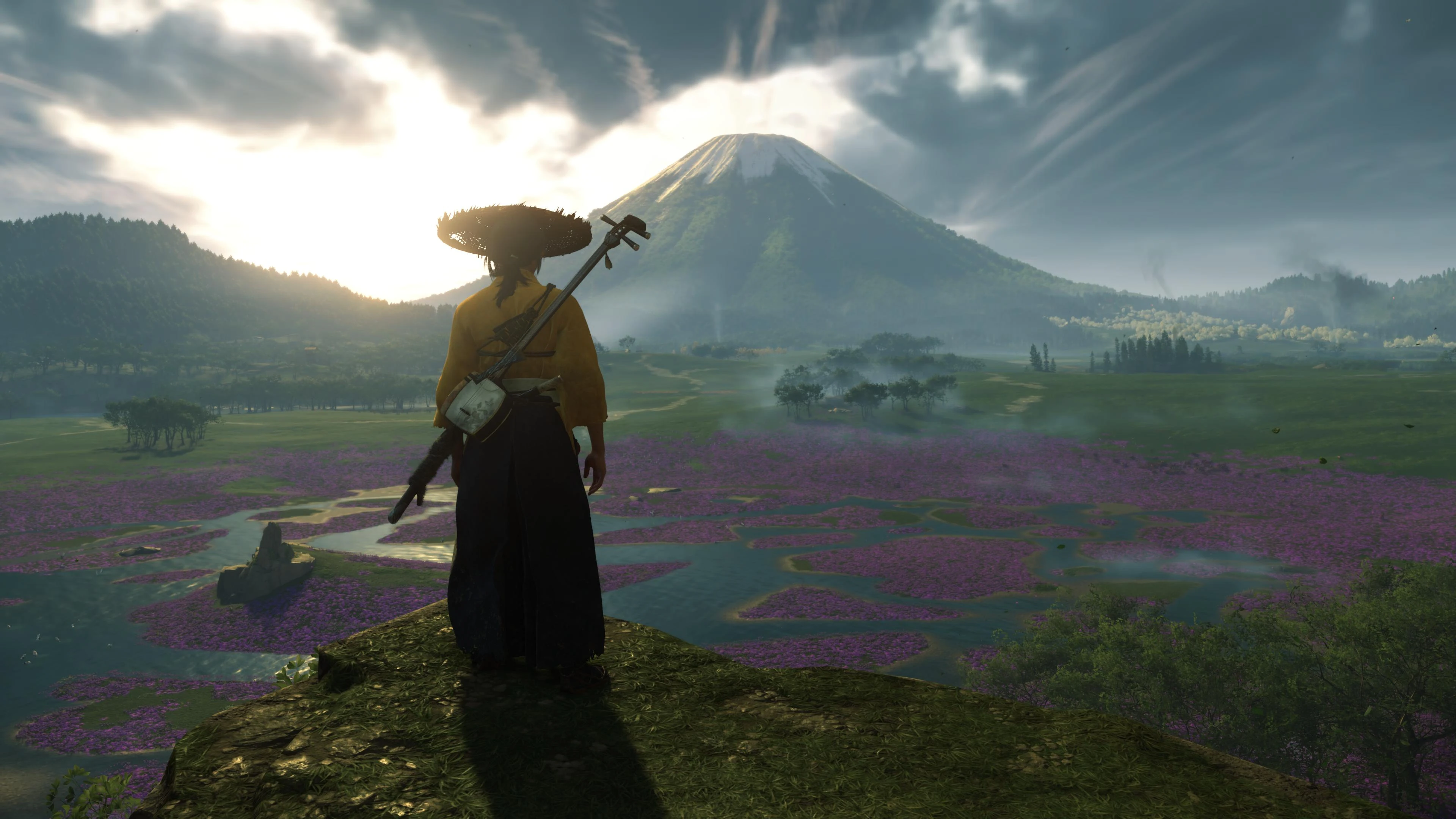
Meet Atsu: roaming mercenary, shamisen player, and the woman who single-handedly tanked a thousand YouTube rage videos just by existing.
The controversy around her casting feels exhausting in retrospect because—and I cannot stress this enough—Atsu offers a genuinely different perspective than Jin Sakai from Ghost of Tsushima. Not because of progressive brownie points or representation bingo, but because her character design creates better gameplay justification for literally everything you do.
Jin struggled morally with "dishonorable" tactics like assassination and poison. It created interesting narrative tension, sure, but it also meant the game constantly fought against itself. You're encouraged to be a stealthy ghost while your protagonist laments becoming one.
Atsu? She's a mercenary with nothing to lose. No samurai code. No aristocratic honor to uphold. When she throws a kunai into someone's throat or sets a camp on fire, it's not a moral crisis—it's Tuesday. This design choice means every mechanic, from weapon-throwing to environmental kills, flows naturally from who she is rather than conflicting with it.
Plus, Erika Ishii's voice performance brings a grounded emotional weight that makes Atsu's family-driven revenge arc land harder than Jin's more abstract "honor vs. pragmatism" struggle. The moments where you play her grandmother's shamisen or practice her father's ink painting aren't just mechanical diversions—they're genuine character expression.
Five Weapons Walk Into A Bar...
Here's where things get messy, and I mean that as both praise and critique.
Ghost of Tsushima had four katana stances. Simple, elegant, mastery-focused. Yōtei says "cute" and hands you five melee weapons plus three ranged options:
Melee:
- Katana (balanced, duel-focused)
- Dual Katanas (aggressive DPS chains)
- Odachi (slow devastation for heavy armor)
- Yari Spear (crowd control, interruption)
- Kusarigama (chain weapon, shield destruction)
Ranged:
- Bow with specialty arrows
- Tanegashima rifle (armor penetration)
- Flintlock pistol (interruption)
On paper, this creates genuine tactical depth. Encounter design forces adaptation—you need the spear against certain enemy compositions, the odachi becomes essential for armored brutes, and the kusarigama turns shield walls into comedy routines.
In practice? The community consensus is spot-on: everything feels slightly diluted.
The four-stance system rewarded mastery of timing and positioning. The eight-weapon system rewards... having the right tool equipped. It's less about perfect execution and more about correct loadout selection. Combat often devolves into "spam light attacks until heavy attack window opens," which is satisfying enough but lacks the rhythmic flow that made Tsushima's duels legendary.
That said, when it clicks—when you're switching from dual katanas to spear mid-combo to interrupt an incoming heavy attack, then quick-drawing the pistol to stagger an archer before closing distance with the kusarigama chain-pull—it feels incredible. The problem is those moments are punctuation marks in longer sentences of fairly standard action combat.
The weapon-switching awkwardness doesn't help. Animations play even when you're already holding one of the dual swords. The R2 button does approximately seventeen different things depending on context, leading to accidental weapon throws when you meant to aim your bow. It's the kind of friction that compounds over a 40-hour playthrough.
Hokkaido Is Absolutely Stunning (And You'll Get Lost In It)
If there's one thing Sucker Punch absolutely nailed, it's making you feel like you're in 1600s Hokkaido.
The studio did on-location research, and it shows. Seasonal variations, wildlife behavior, architectural authenticity—this isn't just "generic Japanese landscape #3." You can identify regions by their environmental storytelling: smoke patterns from different cooking fires, the way certain villages arrange their homes, how natural landmarks telegraph points of interest.
The Guiding Wind system remains the gold standard for open-world navigation. No minimap. No waypoint markers cluttering your screen. Just wind direction, bird calls, and village rumors. It's immersive in a way that makes Ubisoft-style UI pollution feel barbaric by comparison.
New additions work well too. The spyglass (very Breath of the Wild) lets you scan the horizon and tag points of interest. The clue-card bounty hunting system turns investigation into a satisfying puzzle rather than a waypoint chase.
But—and this is a significant "but"—the underlying structure is still camps, fortresses, and liberation activities. Sucker Punch has gotten really good at disguising the open-world checklist, but if you've played one Ubisoft game in the last decade, you'll recognize the skeleton underneath the gorgeous Hokkaido skin.
Side quests are mostly excellent, with unique storytelling and memorable characters. But every fifth quest still boils down to "clear this camp of enemies," and no amount of beautiful wind physics can hide that.
The Performance Question
Ghost of Yōtei launched on September 25, 2025, in what can only be described as shockingly polished condition for a modern AAA release. Base PS5 Performance mode? Stable 60fps, zero drops during gameplay. Resolution scales dynamically but maintains visual fidelity.
The November 2025 Patch 1.1 made things even better. PS5 Pro with unlocked frame rates can hit 70-90fps in Ray Tracing Pro mode—a 33% improvement over the original 60fps cap. VRR support on 120Hz displays pushed Balanced Ray Tracing mode to 40-60fps on base hardware.
Translation: This game runs beautifully and looks like an interactive Kurosawa film while doing it.
What The Numbers Actually Tell Us
Let's return to those 3.3 million first-month sales, because context matters.
Ghost of Tsushima sold at a similar pace, but launched when the PS4 had a 110 million install base. Yōtei launched on PS5 at 84.2 million units sold. Adjusting for platform lifecycle, these are comparable trajectories—maybe even slightly better for Yōtei when you factor in the higher price point ($70 vs. $60).
Revenue-wise? Approximately $130 million in the first two weeks against a $60 million development budget. Break-even achieved immediately, with long-tail sales continuing through the holidays.
The boycott campaigns—both from right-wing critics opposing Atsu as protagonist and left-wing activists opposed to how Sucker Punch handled employee terminations—proved utterly ineffective at impacting sales. Professional reviews ignored the controversy entirely. Players showed up anyway.
Streaming numbers paint a more complex picture. Twitch viewership peaked at 111,825 concurrent viewers at launch, then dropped to ~370 average viewers by December. That's a steeper decline than typical AAA releases, though single-player games always struggle to maintain streaming engagement compared to multiplayer titles.
YouTube content, conversely, has performed exceptionally well, suggesting strong organic interest from the core player base even as live streaming attention moved elsewhere.
New Game Plus & The Road Ahead
Sucker Punch's post-launch support has been aggressive in all the right ways.
New Game Plus (launched November 24, 2025) includes:
- Full gear carryover with additional upgrade tiers
- Ghost Flowers currency system for 30+ new cosmetics
- 10 new charms, including three "Cursed Charms" that add challenge for bonus rewards
- Enhanced photo mode features
- Two additional difficulty tiers
More significantly, Ghost of Yōtei: Legends is confirmed for 2026 as free DLC—2-player story missions and 4-player supernatural survival mode, mirroring Tsushima's multiplayer expansion.
Story DLC remains unconfirmed, with lead writer Ian Ryan noting Atsu's arc feels "complete" but leaving the door open if "there's a story worth telling."
The Verdict: Refined, Not Revolutionary
Here's the honest assessment Ghost of Yōtei deserves:
This is a very good game that plays it very safe.
Sucker Punch took everything that worked about Ghost of Tsushima, polished it to a mirror shine, and added just enough new elements to justify the sequel. Atsu offers a different perspective. Hokkaido is more visually impressive than Tsushima Island. Combat has more variety (even if it sacrifices some depth). The game launched in excellent technical condition.
But it's also fundamentally iterative. If you wanted Sucker Punch to revolutionize open-world design or push the action genre into uncharted territory, you'll be disappointed. This is franchise consolidation, not expansion.
The controversy around it feels exhausting and irrelevant in hindsight. The game succeeds or fails on its own merits—which are substantial—not on cultural war nonsense or employee drama. Players who engaged with it found a polished, respectful, gorgeous samurai adventure that doesn't overstay its welcome.
Metacritic averages: 85 (critics) / 8.7 (users)
Actual player sentiment: "It's really fucking good, just not revolutionary"
Worth Playing?
If you enjoyed Ghost of Tsushima and want more of that with a different perspective and prettier environments, absolutely yes. If you're burned out on open-world games and need something truly innovative to pull you back in, this probably isn't it.
But here's the thing: sometimes "extremely polished execution of a proven formula" is exactly what you want. Ghost of Yōtei is comfort food for samurai game fans—and sometimes, comfort food hits the spot perfectly.
Final Score: 8.5/10 — A gorgeous, well-crafted sequel that respects your time, even if it doesn't reinvent the wheel.
Now if you'll excuse me, I have a shamisen to play and some bandits to introduce to my kusarigama.
Have you played Ghost of Yōtei? What's your take on Atsu versus Jin as protagonists? Drop your thoughts in the comments below—and if you haven't picked it up yet, it's currently available on PS5 with New Game Plus ready to go.
Credit: In-game screenshots
Comments & Discussion
🗣️ Share your thoughts! Comments will appear here.